Track Design & Visual Style
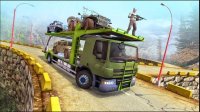
The environments in Circuit Runner 3D are built to test your reflexes and spatial awareness. Mountain routes feature tight corners and elevation changes that force you to brake early and accelerate out of turns. Desert tracks offer long straightaways where maintaining top speed is key, but sudden sand patches can reduce traction. Industrial zones present a mix of narrow corridors and open sections, with obstacles like barriers and construction equipment placed along the road. The 3D graphics give each setting a distinct look, from rocky cliffs to sun-baked asphalt and metallic structures.
Vehicle Selection & Handling
Before each race, you can pick from a small fleet of cars, each tuned for different performance traits. Some vehicles prioritize acceleration, letting you recover quickly after slowing down. Others focus on top speed, which is useful on straight sections but requires careful braking in curves. A third type may offer balanced handling, making it a reliable choice for new players. The differences are noticeable on the road, so experimenting with each car helps you find one that matches your preferred driving style.
Competition Modes
Circuit Runner 3D supports two main ways to play. In single-player mode, you race against the clock, aiming to complete each track in the fastest time possible. This mode is ideal for learning track layouts and improving your lap times. For those who prefer head-to-head action, the two-player split-screen mode lets a friend join on the same computer. Each player uses a separate set of keyboard keys, creating a competitive local experience without needing an internet connection for multiplayer.
Controls & Accessibility
The control scheme is straightforward, using standard keyboard inputs for steering, acceleration, and braking. This simplicity allows new players to start racing immediately without a steep learning curve. A full-screen option is available to remove distractions and increase immersion. The interface displays your speed and position clearly, so you can focus on the road ahead. Regular practice helps you anticipate traffic patterns and obstacle placements, leading to smoother runs and better finishing positions.






Comments
0 comments